
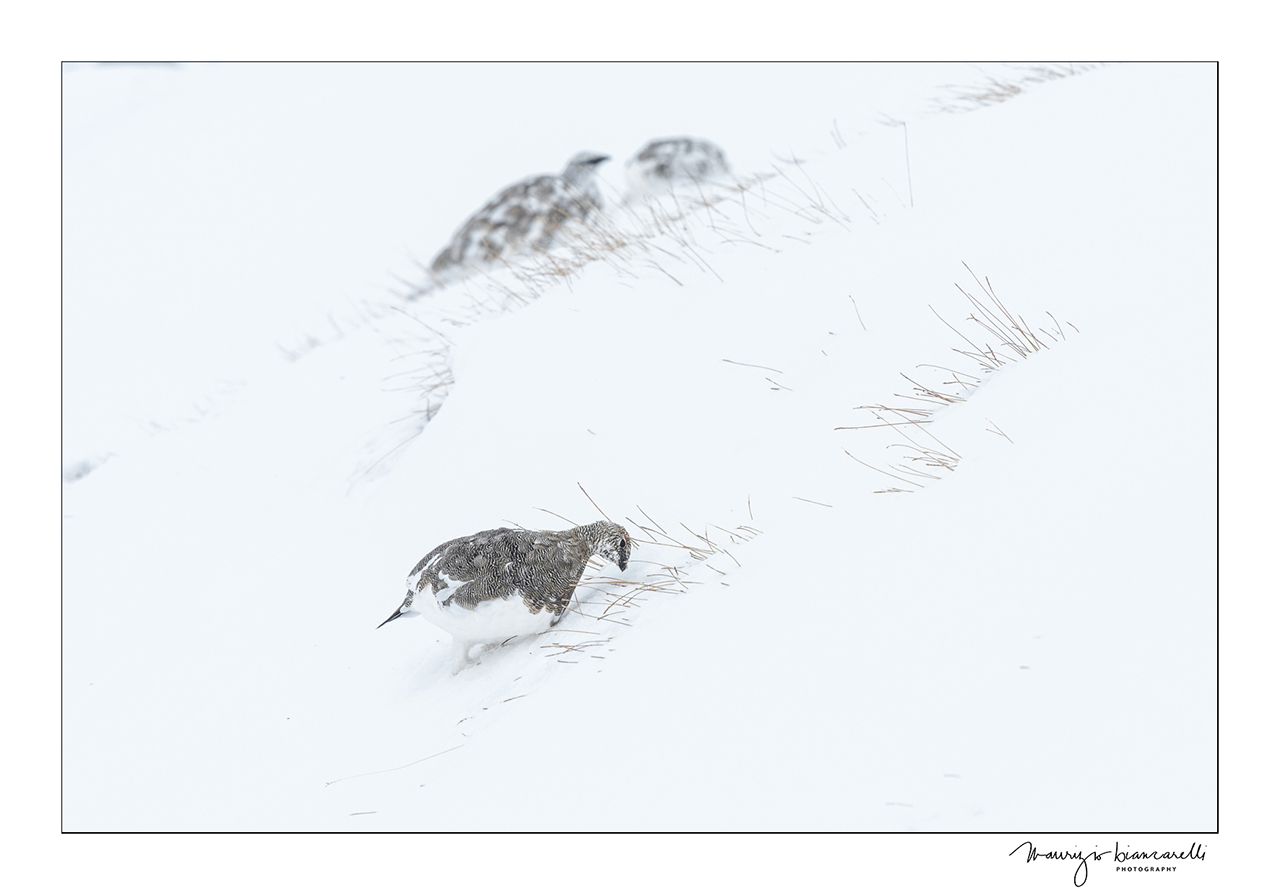
At least half a metre of snow had fallen during the night and now a total whiteness had transformed the mountain. All was silence, only the occasional weak gust of wind. The now impassable road to the pass meant that no traffic was expected for a few days.
I felt thrilled, almost excited by that early winter landscape, the solitude and the silence: not a soul around, as I moved cautiously in search of ptarmigans. What a privilege, fortune was upon me, and I couldn’t wait to find and photograph them.
Every now and then the cry of the ptarmigan, hoarse and guttural, would drift through the suspended air. It is an ancestral sound, a call that surprises every time you hear it. I find it evocative of ancient times and it suits these daughters of the cold, who now fight for survival against climate change and against the men who still insist on hunting them, as if they did not have enough problems already.
I finally find them. There are three of them, pecking at the sparse emerging stems and digging through the snow on the steep slope in search of shoots and leaves of willows and other dwarf alpine plants, their only food in winter. I follow their confident movements from a distance and enjoy the peaceful scene – an example of perfect adaptation of a species to its environment – while I hope, in my heart, that their song will continue to resonate on our mountain slopes for a long time to come.